NIGHTSHADE (Intervista)

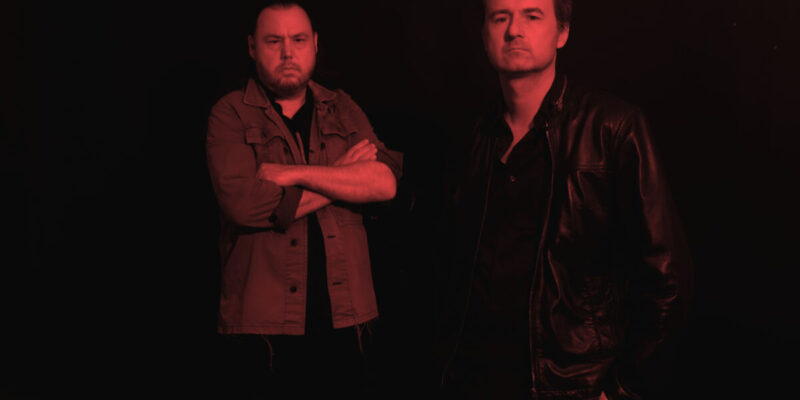
With In Essence Divided, Nightshade expands its artistic vision through a multifaceted work that blends extreme metal, atmospheric soundscapes, mythology and cultural narratives from across the world. The album unfolds as an exploratory journey through different landscapes, traditions and emotions, while maintaining a coherent sense of mystery and introspection. We spoke with the band about composition, lyrical themes and the creative process behind this ambitious release.
1. Do you usually start composing from an emotional idea or from sound experimentation?
Thomas: Hi! With Nightshade, it could be anything, in fact. It can be an emotion, a sound heard on TV, or an energy I felt at some point in time.
2. Can “In Essence Divided” be considered a fully immersive journey rather than a collection of songs?
David: That’s an interesting question. My first reaction to these songs, when we were working on them, was that the whole somewhat lacked coherence: it felt a bit like a mixtape, and this was indeed intentional. It’s not always easy to drift from one song to another, but I think that is part of the experience and experiment that is In Essence Divided. It’s a journey, from the utter void to Northern Europe, across the Kazakh steppes and into the Andes. Lots of different landscapes along the way, but they all shine with the same aura of mystery and weirdness.
3. How important is silence and negative space within your arrangements?
Thomas: We focused a lot on this record on the space between the notes, and on the notes we don’t play. In fact, the less you do, the more emotional tension there can be. When you play fewer notes on any instrument, those notes have to be chosen more carefully because you have to do more with less. Interesting, isn’t it? This approach led us to songs like Baiterek and Night Torn, but also the opening track, Stateless Journey, which conveys a lot of expression with fewer elements.
4. What inspired the mythological and cosmological themes behind the album’s concept?
David: It has always been at the center of Nightshade’s lyrics. When we started, we had this stellar atmosphere, very slightly inspired by Covenant (Nexus Polaris) and Samael, but also a deep interest in mythologies, Christian and otherwise. Mars is the Red Planet, but it is also the God of War. Saturn is both a planet and the god of time and, as such, a metaphor for the passage of time. Over the years, we mostly focused on both ancient and Biblical mythologies. When I started writing lyrics for In Essence Divided, I was listening a lot to Dordeduh and Negur? Bunget, and I became interested in Romanian and Eastern European folklore. The idea of exploring the same theme — the creation of the world — as seen through different cultures came very naturally at the time.
5. Would you define your music as cinematic in nature or purely musical expression?
Thomas: It certainly has both elements. The cinematic aspects are created through our use of various sounds, known as musique concrète, to build uniquely different soundscapes. But we are first and foremost rooted in metal, so that is ultimately where everything needs to land for us.
6. How do you maintain emotional depth within highly technical compositions?
Thomas: The complexity in our songs actually comes from the arrangements rather than from technical playing. I think the complexity on this record has evolved more in the ideas we want to communicate from beginning to end than in individual parts or instrumental technique. This emotional depth comes from the fact that Nightshade’s music is, at its core, very personal.
7. Was there a moment during production when the album structure naturally came together?
Thomas: Not really, haha! The ideas on the record came quite naturally, but it took a fair amount of discipline to stitch everything together into a coherent album. In fact, it was during the mixing process that we re-recorded multiple parts — vocals, guitars and more — to give the material a more natural fit as a cohesive record. The mixing process took a very long time, and Raphael Bovey did an amazing job bringing this album to life.
8. How do you avoid losing warmth in heavily layered soundscapes?
Thomas: We actually don’t have that many layers of instruments and sounds, believe it or not. I don’t double my parts very often, and most of them are played only once. The density comes from the choice of sounds — especially on the analog synthesizers — as well as from the arrangements themselves.
9. Do visual elements such as artwork influence your writing process?
David: In some ways, the lyrics shaped the album, and the lyrics themselves were influenced by paintings and literature. A good example is Brother Of Sleep, which was written with Waterhouse’s painting Sleep and His Half-Brother Death in mind. Naturally, I wrote the lyrics as a dialogue between these brothers, and it called for a guest vocalist, Sylvain Auclair.
10. If this album represents a universe, what kind of sonic world does it describe?
David: I often picture an interplanetary landscape: darkness is everywhere, but so is light, and everything is incredibly bright. There is no night, and day is not the blinding brightness we experience on Earth. I think that sums up Nightshade quite well: although our style is rooted in extreme metal and we deal with melancholic and introspective themes, light remains essential in both our music and lyrics. It is light that gives relief and meaning to the darkness.